
USS Indianapolis: the ship that carried the Hiroshima bomb and four days among sharks
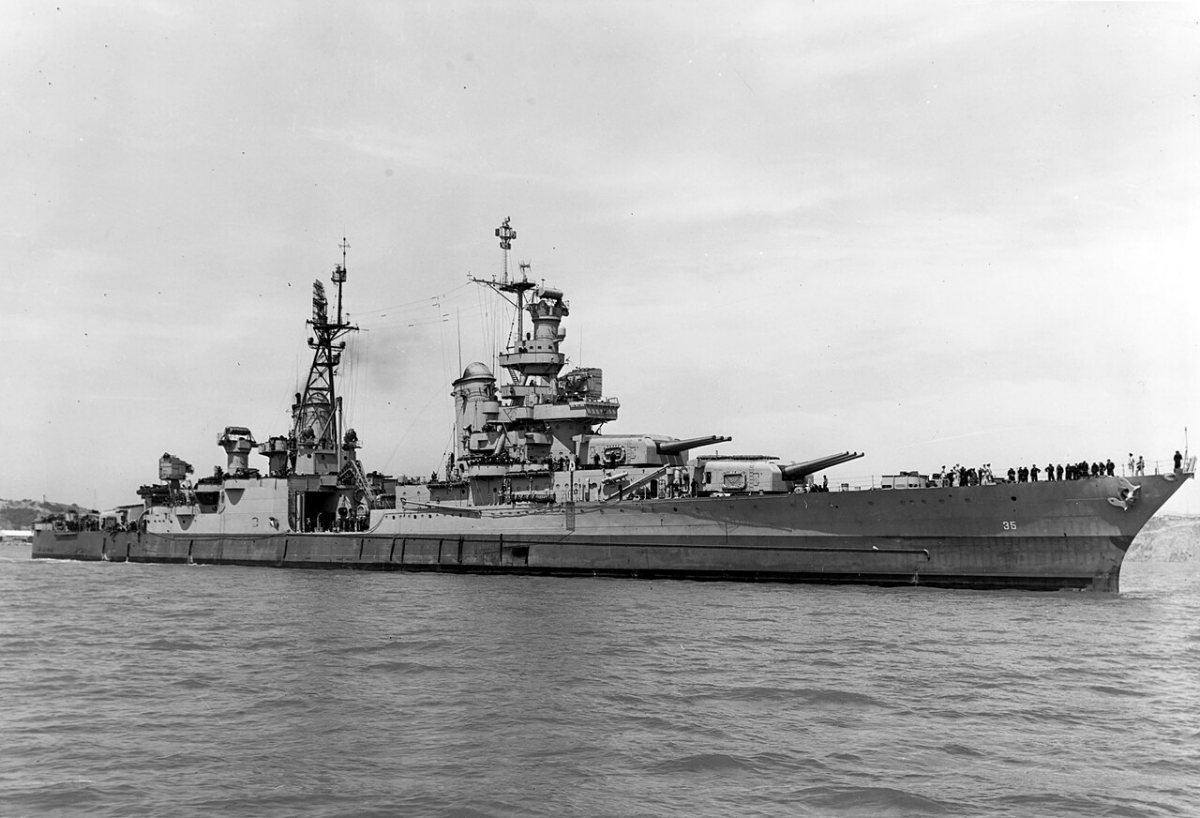
In July 1945 the US cruiser Indianapolis delivered secret cargo for the atomic bomb. Four days later a Japanese submarine sank her. Of about 1,195 men aboard, 316 survived. This is the real story behind the legend of the worst shark attack in history, and what is and isn't true.
- 01
Secret cargo: the heart of Little Boy
On 16 July 1945 the cruiser left San Francisco with cargo her crew knew nothing about. According to the Atomic Heritage Foundation, she carried a crate with the gun mechanism of the Little Boy bomb and a canister of uranium, about half of the US supply at the time. She delivered it to Tinian on 26 July. From there the Enola Gay took off with the Hiroshima bomb on 6 August.
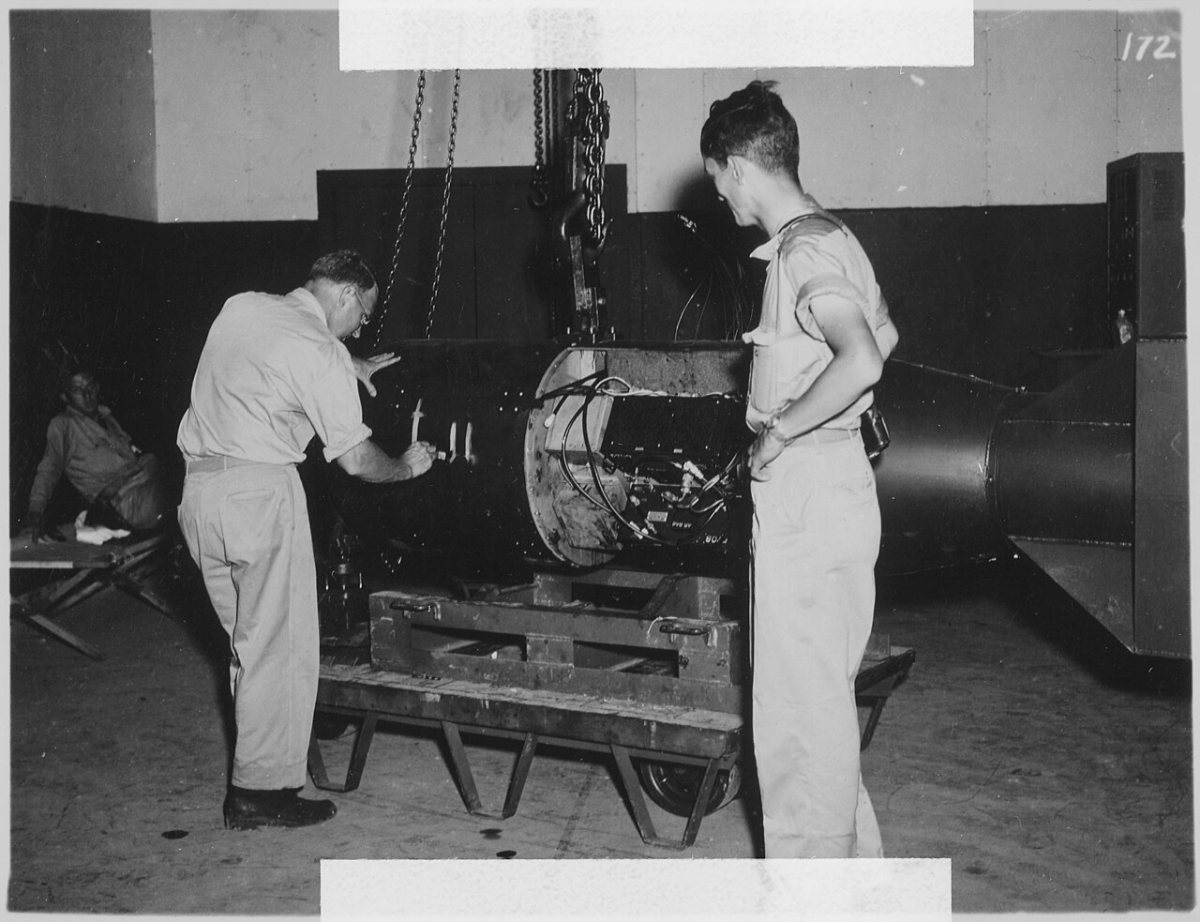
Little Boy being assembled on Tinian, 1945. Photo: US government, public domain (Wikimedia Commons) - 02
Alone and unescorted
After unloading, the ship sailed via Guam towards Leyte in the Philippines, alone and without escorts. According to Britannica, the Navy knew Japanese submarines were operating in the area, but Captain Charles McVay was not warned.
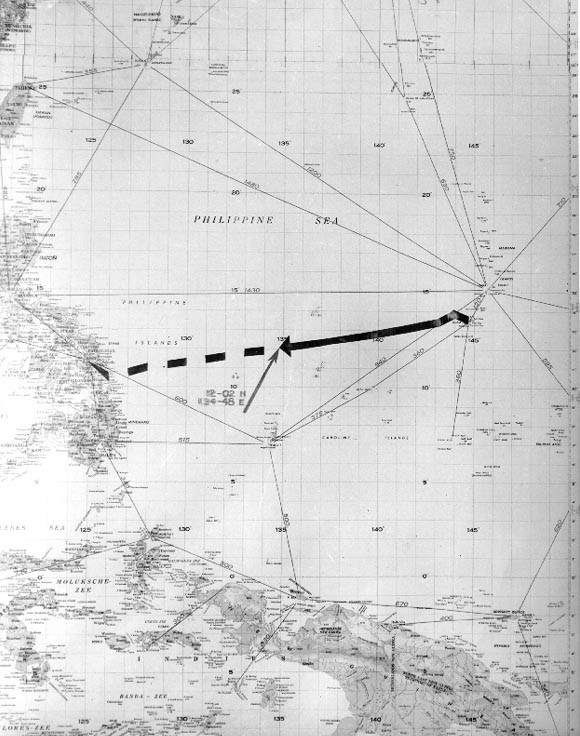
Intended route from Guam to the Philippines. Photo: U.S. Navy, public domain (Wikimedia Commons) - 03
30 July, just after midnight: 12 minutes
The Japanese submarine I-58, commanded by Mochitsura Hashimoto, fired torpedoes and two hit the starboard side. The cruiser sank in about 12 minutes. According to Smithsonian Magazine, about 900 men made it into the water and about 300 went down with the ship. Many had no life jacket or raft.
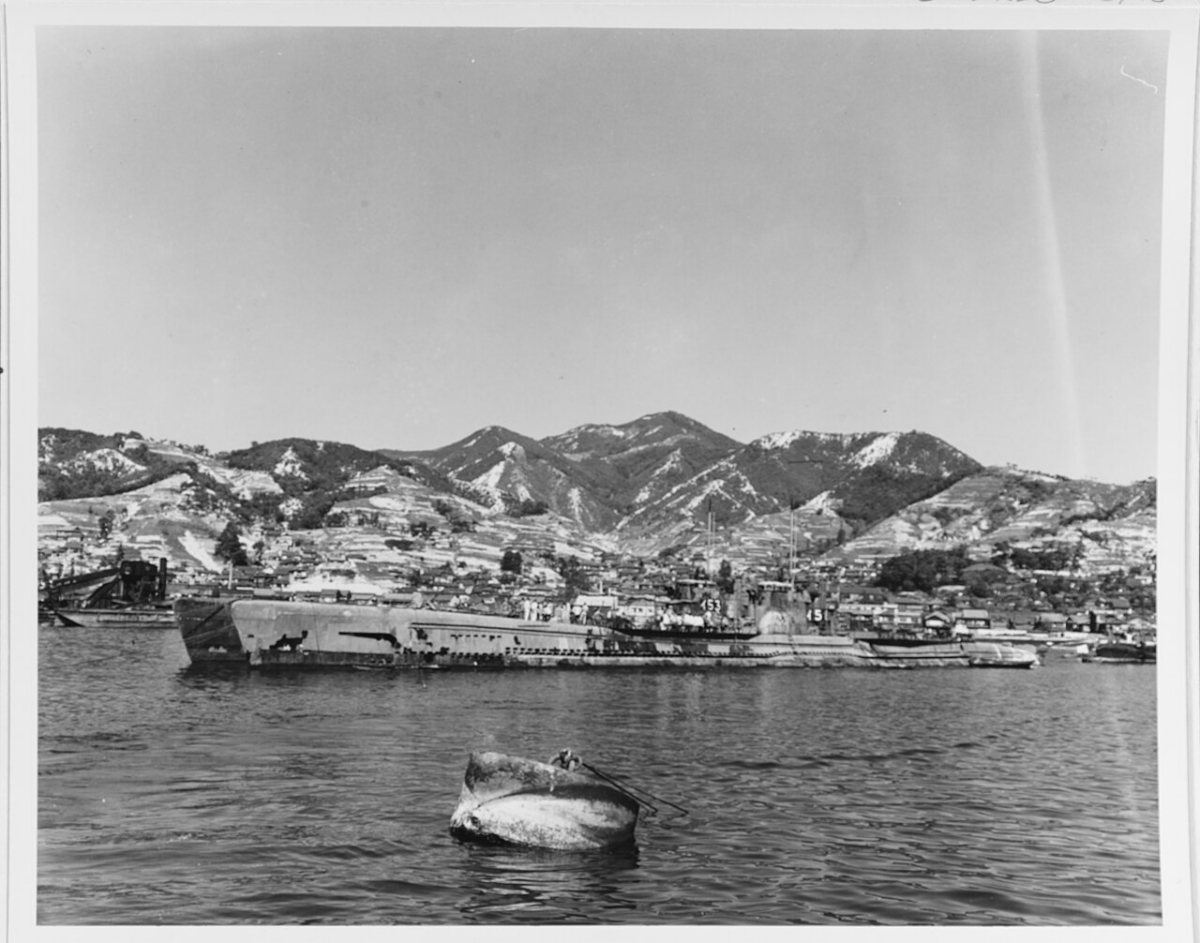
I-58 (right) and I-53 at Kure, 1945. Photo: U.S. Navy, public domain (Wikimedia Commons) - 04
Nobody came
The ship was due to arrive, but nobody acted on her absence for days. The survivors spent four days and four nights in the water. According to National Geographic, most were killed not by sharks but by thirst, exhaustion, sun, cold nights, injuries and drinking seawater, which drove some to delirium.
- 05
Sharks: what we know and what is myth
Sharks arrived on the first morning. According to Smithsonian Magazine, experts generally agree they were mainly oceanic whitetips (longimanus), possibly also tiger sharks. Longimanus lives in the open ocean near the surface and is often first on the scene of sea disasters. Nobody knows how many men sharks killed. Estimates range from a few dozen to more than 150.
- 06
The chance sighting that saved 316 men
On the morning of 2 August, Lieutenant Wilbur Gwinn spotted an oil slick and men in the water during a routine patrol. Catalina pilot Adrian Marks then landed on the open sea against standing orders. His crew pulled 56 men from the water, tying some to the wings. That night USS Cecil J. Doyle and other ships arrived. In total, 316 men were rescued.
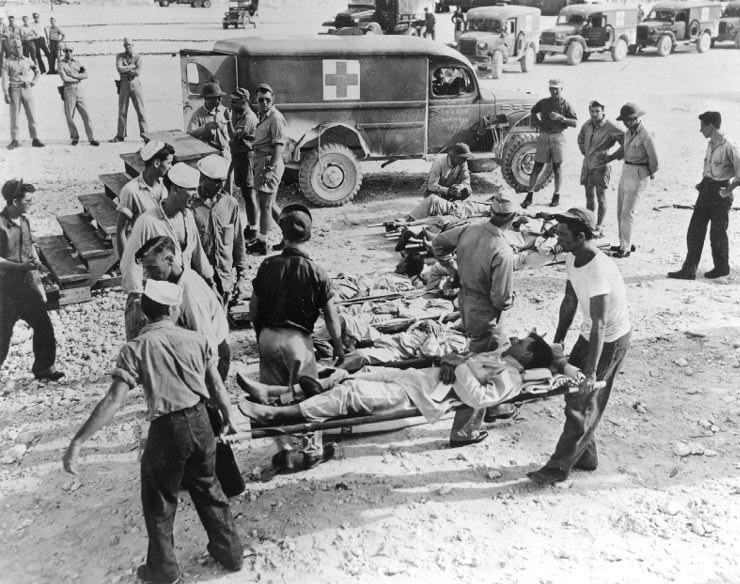
Survivors on Guam, August 1945. Photo: U.S. Navy, public domain (Wikimedia Commons) - 07
The captain who was convicted
Captain McVay survived. In February 1946 a court-martial found him guilty of failing to zigzag. According to History.com, he was the only US captain in World War II court-martialed for losing a ship to enemy action. Even Hashimoto testified in his defence. Congress exonerated him in October 2000 and the Navy cleared his record in July 2001.
- 08
The wreck found after 72 years
On 18 August 2017 Paul Allen's expedition aboard the research vessel Petrel found the wreck about 5,500 metres down in the Philippine Sea. It remains a war grave and must not be disturbed.
- 09
Why this story stays with me
I have seen a longimanus with my own eyes at Elphinstone Reef in the Red Sea, about five metres from the boat. A calm, curious animal, not a monster. The Indianapolis story doesn't say sharks are evil. It says the sea owes nobody anything. The men of the Indianapolis didn't die because they were weak, but because nobody was looking for them.
Quick summary
- The ship delivered parts of Little Boy, the bomb dropped on Hiroshima on 6 August 1945, to Tinian.
- Submarine I-58 sank her on 30 July 1945, in about 12 minutes.
- About 1,195 men were aboard; 316 were rescued.
- The survivors were in the water for four days before being spotted by chance.
- Nobody knows how many died from sharks. Most died of thirst, exhaustion and injuries.
What to take from it when you go to the sea
- Always tell someone on land where you are going and when you will be back. Nobody searched for the Indianapolis survivors because nobody knew they were missing.
- On boats and open-sea trips, keep a life jacket within reach and listen to the safety briefing.
- Never drink seawater. Thirst and drinking seawater killed more Indianapolis men than sharks did.
- If you end up in the water as a group, stay together. A group is easier to spot and people keep each other afloat.
FAQ
Did USS Indianapolis carry the whole atomic bomb?
No. She carried components of Little Boy, the gun mechanism and the uranium. The bomb was assembled on Tinian.
How many men did sharks kill?
There is no exact figure. Historians' estimates range from a few dozen to more than 150. Most men died of thirst, exhaustion, exposure and injuries.
Which sharks attacked the survivors?
Most likely mainly oceanic whitetips (longimanus), which live in the open ocean near the surface, possibly also tiger sharks. It cannot be determined with certainty.
Is the story in Jaws true?
Quint's monologue is based on the real event, but according to National Geographic it contains errors. For example, it is not true that all the dead were killed by sharks.
Where is the wreck of USS Indianapolis?
In the Philippine Sea, about 5,500 metres deep. Paul Allen's expedition found it in 2017. It is a war grave.
Free shark safety guide
Shark behaviour, emergencies, gear and a pre-dive checklist in one PDF. Save it before your trip to the sea.
Download the free guideRead next
Sources
- Naval History and Heritage Command (U.S. Navy) – USS Indianapolis (CA-35)
- Smithsonian Magazine – The Sinking of the USS Indianapolis Triggered the Worst Shark Attack in History
- National Geographic – USS Indianapolis: the true story behind the shark attack in Jaws
- Atomic Heritage Foundation (National Museum of Nuclear Science & History) – USS Indianapolis
- National Archives (Prologue blog) – 75. výročí potopení USS Indianapolis
- HistoryNet – SOS Indianapolis: behind the sinking of the heavy cruiser
- Live Science – What is the deadliest shark attack ever recorded?
- Britannica – USS Indianapolis
- History.com – After 72 years, wreckage of U.S. Navy's biggest tragedy is found
- U.S. Navy (CNIC) – The sinking of the USS Indianapolis
- Wikimedia Commons – dobové fotografie U.S. Navy (volné dílo)
Historical article. Data from the sources listed above, as of November 2026. Figures for men aboard and survivors differ by one between sources, and shark deaths are only an estimate. Period photographs are public-domain works of the US Navy and US government.